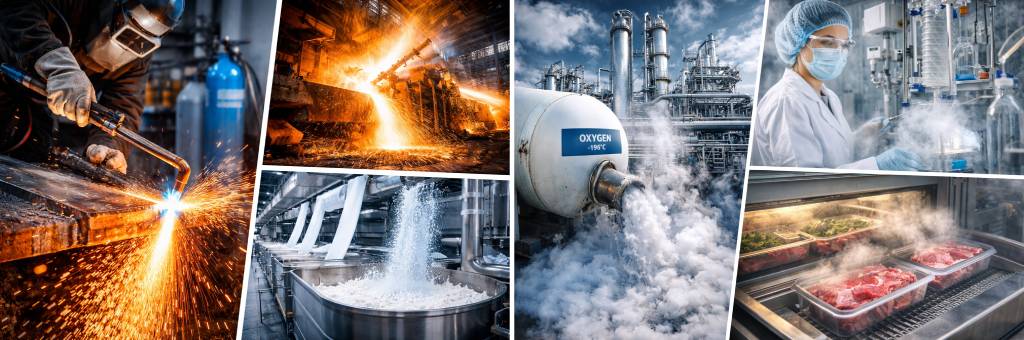
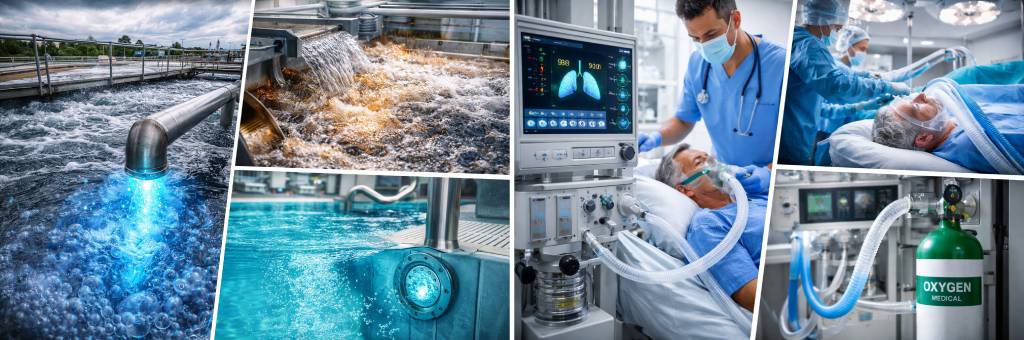
When discussing oxygen components used in medical or industrial applications, the applicable standards are extremely stringent in order to prevent the risk of spontaneous combustion.
ASTM G93:2019: standard for cleaning methods and contamination levels for materials and equipment used in oxygen-enriched environments.
EIGA Doc 33/18: guideline for cleaning equipment intended for oxygen service.
ISO 15001: specifies material compatibility and cleanliness requirements for anaesthetic and respiratory equipment.
The fundamental principle is that the absence of organic residues (hydrocarbons) must be absolute, because oxygen under pressure can react violently with residual grease and oils, triggering explosions.
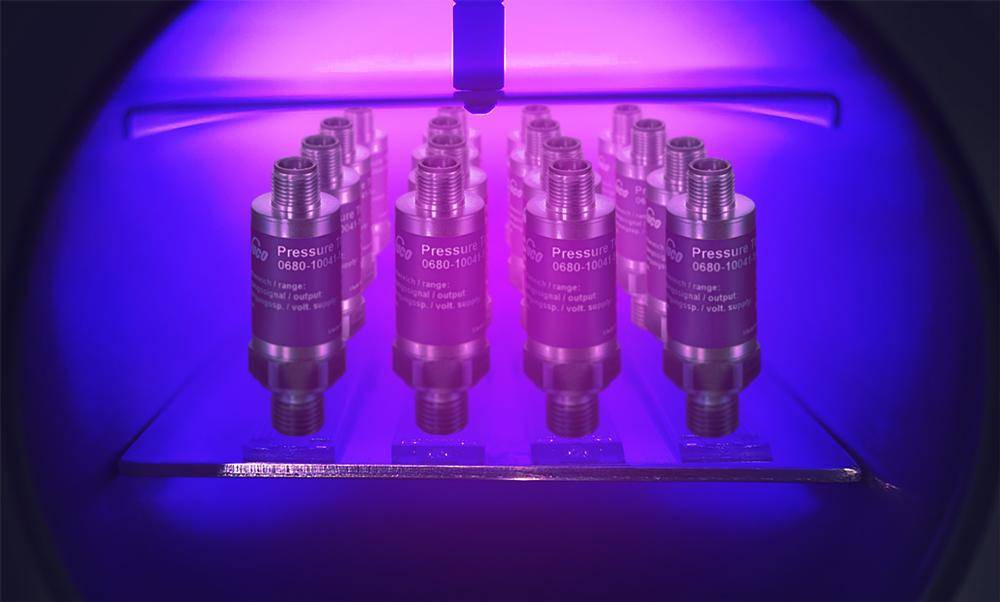
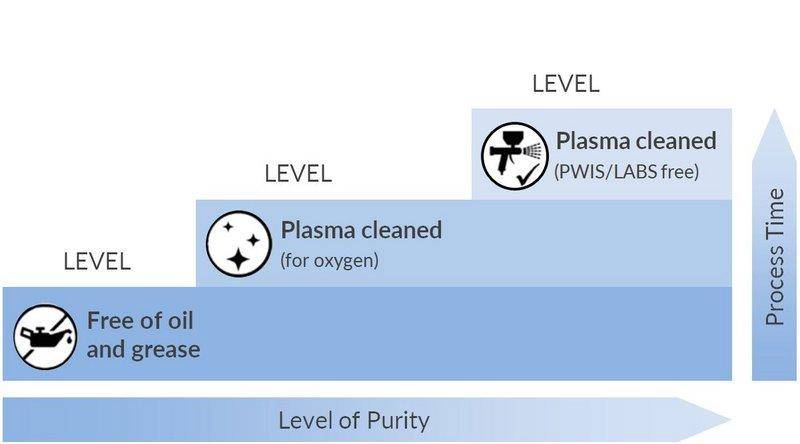
The high level of cleanliness (max. 20 mg/m²) corresponds to ASTM G93:2019 Level B, and the quantity of organic residues is regularly verified by a national accreditation institute (DAkkS). After plasma cleaning, the pressure switches are individually packed in specially marked sealed PE bags to protect them from further contamination. You can find more information here.
PWIS COMPLIANCE: EFFICIENCY IN THE PAINTING PROCESS
The acronym “PWIS” refers to substances such as lubricants, oils, greases, and silicones that, even in very small quantities, can cause partial defects (so-called “craters”) or complete paint detachment from the substrate.
This results in higher costs due to rework to restore paint quality or to scrap affected parts. That is why this topic is of critical importance for OEMs and their suppliers.
The plasma-cleaning process, together with individual packaging in silicone-free PE bags, ensures that SUCO pressure switches and transmitters comply with PWIS requirements in accordance with VDMA 24364.
The high purity and effectiveness achieved by the plasma-cleaning process are regularly verified by the German accreditation body. On request, SUCO provides a declaration relating to the cleaning process.
THE TECHNOLOGY: PLASMA CLEANING VS. LIQUID-BASED METHODS
Plasma cleaning is a low-pressure process in which oxygen or argon is electrically excited until it becomes plasma. This solution offers several advantages over liquid or ultrasonic cleaning:
- molecular-level effectiveness – the plasma reacts chemically with organic contaminants, converting them into CO2 and H2O so they can then be removed by the vacuum system
- no residues – unlike liquids, it leaves no streaks or thin surfactant films
- treatment of complex geometries – the ionised gas penetrates blind holes and fine threads typical of pressure sensors, where liquids may stagnate because of surface tension
THE RISKS OF TRADITIONAL LIQUID/ULTRASONIC DEGREASING METHODS
The use of liquid solvents or detergents presents critical issues that the safety-focused SUCO Group has deliberately chosen to avoid:
- cross-contamination: if the cleaning bath is not perfectly filtered, particles removed from one component may be redeposited on another
- drying issues: liquid residues trapped in internal cavities can cause long-term corrosion or contamination of other parts of the circuit that are sensitive to moisture, or may even lead to cytotoxicity
- environmental and safety impact: the use of chlorinated solvents (now almost entirely banned) or flammable solvents poses risks to operators and results in high disposal costs
- surface tension: liquids struggle to wet extremely small surfaces (micro-crevices), making cleaning incomplete